Transition Guides:
For a Smooth Transition
Explore our step-by-step guide that helps you introduce your pet gently to high-meat, nutrient-dense nutrition.
Transitioning your Pet to K9 Natural and Feline Natural
The moment has arrived: your pet’s first taste of K9 Natural or Feline Natural. As soon as the food arrives at home, it's tempting to fill their bowl to the top immediately. However, before making the switch all at once, remember that a sudden change in diet can be challenging for your pet. Just like any change to their routine, transitioning to new food works best when it’s done gradually and with care. A smooth transition helps support comfortable digestion, sustained energy, and a positive feeding experience from day one.
This guide will walk you through how to introduce K9 Natural and Feline Natural at the right pace for your pet, helping to set them up to thrive.
Why Transitioning Matters
Any time you change your pet’s diet, their digestive system needs a little time to adjust. Shifting too quickly can overwhelm the gut, sometimes leading to temporary changes like softer stools, digestive upset, or a reduced appetite. K9 Natural and Feline Natural are high-meat, high-protein recipes made from real, whole-food ingredients. In most cases, this means you’re introducing a more nutrient-dense recipe than your pet has eaten before, and their system simply needs a short period to adapt to the improvement. This adjustment period is completely normal for both dogs and cats (and for people, too). Whenever we change our own diets suddenly, our bodies respond. Pets are no different. A gradual transition allows digestion to settle, nutrients to be absorbed effectively, and feeding to remain a positive experience.
Our recommendation:
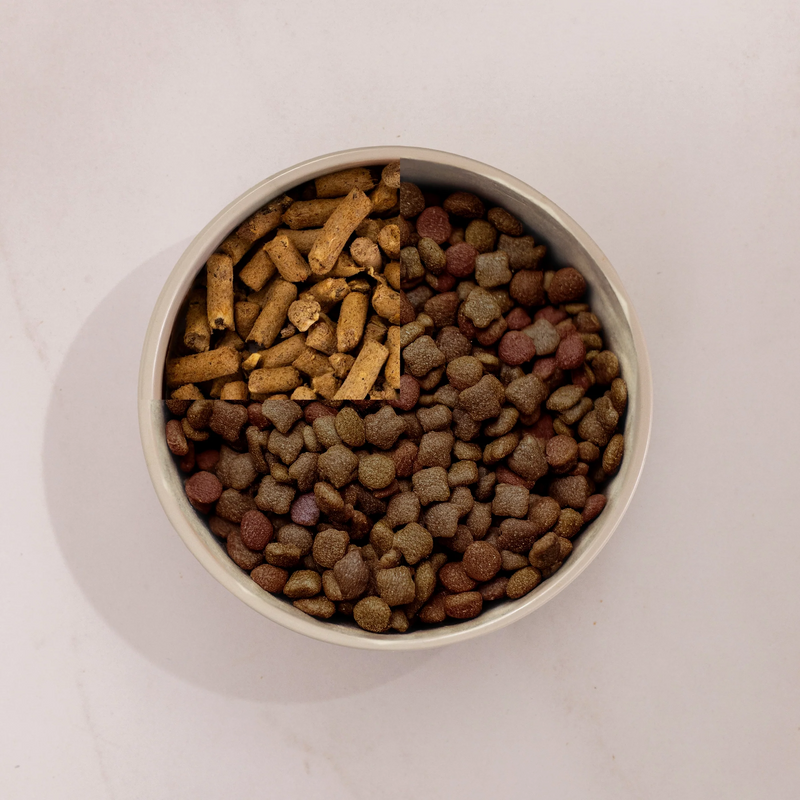
Follow a slow, steady 10 day transition plan. When transitioning your pet to K9 Natural or Feline Natural, start by mixing a small amount into their current food, slowly increasing the amount over 10 days until they enjoy an entire bowl of K9 Natural or Feline Natural. Transitioning correctly over this time will give your pet (and their stomach) time to adjust to the high-meat, nutrient-dense content of our food.
-
Days 1 - 3
Feed K9 Natural or Feline Natural as 25% of your pet’s bowl.
-
Days 4 - 6
Feed K9 Natural or Feline Natural as 50% of your pet’s bowl.
-
Days 7 - 9
Feed K9 Natural or Feline Natural as 75% of your pet’s bowl.
-
Day 10
Feed K9 Natural or Feline Natural as 100% of your pet’s bowl.
Feed K9 Natural or Feline Natural as 25% of your pet’s bowl.
Feed K9 Natural or Feline Natural as 50% of your pet’s bowl.
Feed K9 Natural or Feline Natural as 75% of your pet’s bowl.
Feed K9 Natural or Feline Natural as 100% of your pet’s bowl.
What you Might Notice During Transition
As your pet adjusts, their body is learning how to process a more nutrient‑rich, high‑protein recipe. This can sometimes result in minor, temporary changes. Most are completely normal, short‑lived, and simply reflect your pet adapting to their new, improved nutrition.
Adjusting to a new diet takes internal work. You may notice your pet feeling a little quieter during the first few days. Once settled, their energy often becomes steadier and more vibrant.
Moving to a high-meat, high-protein diet can affect stool texture while their digestive system adjusts. This may look like softer or firmer stools, or a change in frequency, all typically short-term and part of the normal transition process.
Some pets require a slower transition. If appetite decreases slightly, extend the transition period and increase the proportion of their current food. Most pets regain interest quickly once their system adjusts.
Every pet is unique, but most adjust within 10 days, with any temporary changes settling shortly after the transition is complete.
Once settled in, you’ll begin to see the benefits of natural, high‑meat nutrition crafted with care our New Zealand way.
“When changing your pet onto any new diet, a slow transition is essential. This is particularly important if the change is from conventional kibble to a high-meat diet, as the gastrointestinal system needs time to adjust to the different macronutrient ratios and digestibility of the new food.”
- Dr. Josie Gollan, Veterinarian
